
Why Half-and-Half Pizzas Break Most POS Systems (and What To Check Before You Buy)
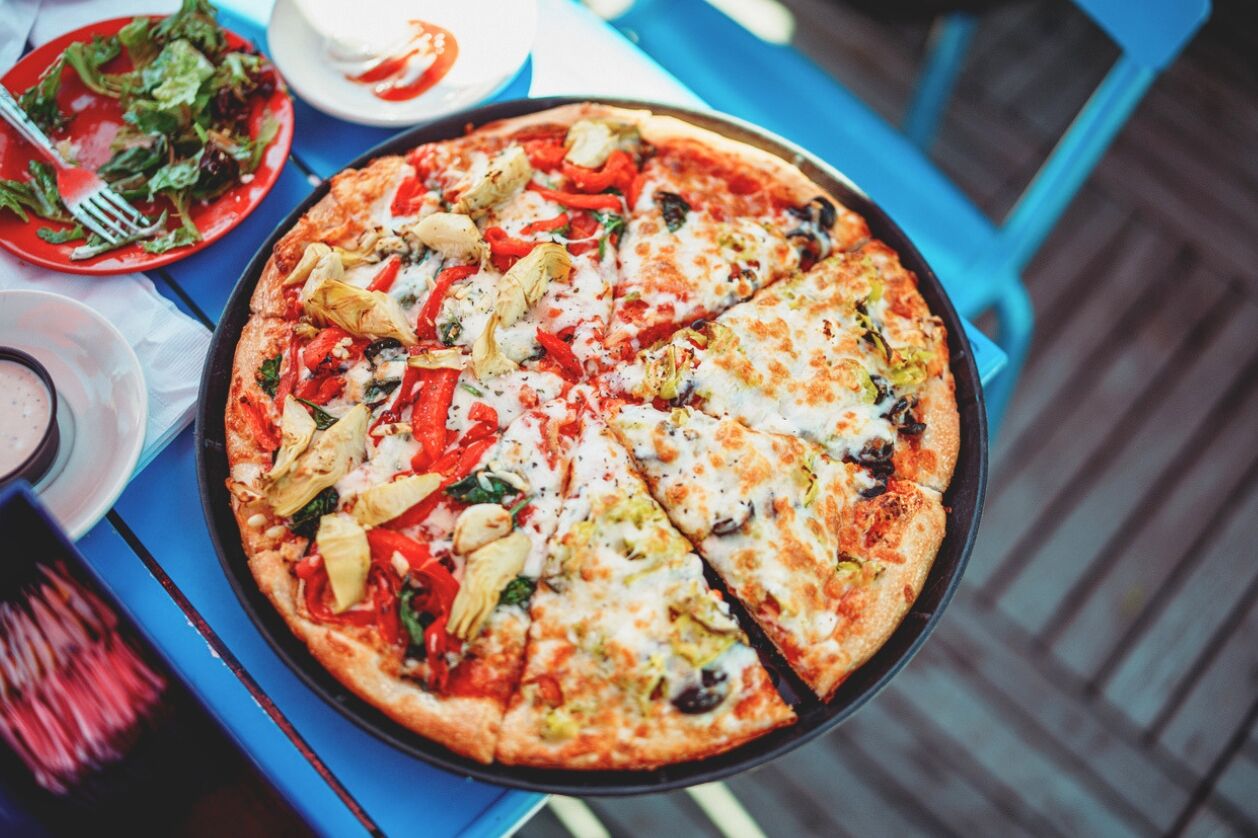
It’s 6:40 pm on a Friday. All four lines are lit. The customer wants a large thin crust, half deluxe with no sausage, half veggie with extra mushrooms, and garlic butter on the crust.
The real question is whether the kitchen gets it right the first time.
For a lot of pizzerias, the honest answer is “not always” – and that costs more than it used to. In a 2026 Restaurant365 survey representing more than 10,000 restaurant operators, 86.6% said food costs went up and 77% said labor costs did. At the same time, the big chains are selling large pizzas for $10. With margins that thin, a remade pizza or a topping you forgot to charge for isn’t just a rounding error. It comes straight out of your profit on that order.
Pizza is the hardest item on any menu
Nothing gets modified like a pizza. Size, crust, sauce, cheese, toppings by the half, premium toppings, specialty pies with swaps. A burger has a handful of options. One pizza order can have dozens.
Most restaurant platforms were built for full-service dining and adapted for delivery later. That may work for a burger and fries. It doesn’t when someone orders two different specialty pizzas on one crust, each with its own changes and its own price.
That’s the half-and-half order, and it’s where most restaurant POS systems fall short.
Five ways half-and-half orders break a generic POS
1. Screen after screen
Many systems use forced modifiers. Pick a size, new screen. Pick a crust, new screen. Pick a half, new screen. Every extra tap adds time on the phone, and when every line is ringing, seconds matter.
2. Workarounds that change with whoever’s working
When there’s no real half-and-half function, staff improvise. They type item notes. One person writes “1/2 veg,” the next writes “left side veggie no onion.” Your kitchen ends up reading the same order three different ways depending on who took the call.
3. Toppings you never charged for
Typed notes skip your pricing logic. Swap jalapeños for anchovies on one half and nobody charges the difference. Do that a few times a night across your locations, and you’re paying for food that never shows up on the ticket total.
4. Tickets the line can’t trust
A good cook sees “deluxe” and already knows what goes on it. If “no sausage” is buried at the bottom of the ticket, the sausage may already be on the pie. Now it’s a remake. If it were an allergy, it would be a much bigger problem.
Andrew Howell, our solutions engineering manager, spent 15 years running restaurants before he joined HungerRush. He puts it this way:
“The biggest thief in a restaurant is not your team members. It’s your trash can.”
Andrew Howell, Solutions Engineering Manager, HungerRush
5. Orders your kitchen can’t make
A new hire takes a party order for deluxe on deep dish. Your kitchen doesn’t make that. Without guardrails on the menu, the order prints anyway, the cook catches it, and someone has to call the customer back and apologize.
High turnover makes these problems worse. With restaurant industry turnover exceeding 75%, there’s a good chance the person taking the order is new. Your POS shouldn’t require an experienced employee to get the order right.
What to check before you buy
Whether you’re shopping for your first POS or replacing the one you have, bring this list to every demo. Better yet, bring your hardest order and ring it in yourself.
- Can you ring in a specialty half-and-half in a few taps? Look for a true half-and-half button. With HungerRush POS, you pick the size and crust, choose half one and half two, and you’re on the toppings screen.
- Can you see what’s on, what’s off, and what’s added at a glance? We use red and green. Green is on the pizza; red has been removed. Toggle between whole, half one, and half two to change either side.
- Does pricing adjust on its own? You should set topping prices once and let the system handle every split, premium toppings included. That’s how our pizza modifier logic works, which means fewer voids and refunds.
- How does the ticket print in the kitchen? Ask to see one. We print removed items first, and you choose the order modifiers print in, so the line sees “no sausage” before anything goes on the pie. Same goes for our kitchen display system.
- Can it block orders the kitchen can’t make? We build guardrails into your menu during setup, so combinations you don’t offer can’t be rung in.
- Does half-and-half work the same way online? Ask to see the online ordering builder, not just the POS. Our online ordering uses the same half one, half two, and whole logic with live pricing. Update your menu once and it carries across the POS, online ordering, and third-party menus, even across multiple locations.
- How fast can a new hire learn it? If you can’t ring in a complicated order on your first try, neither can your newest employee. Bring your hardest order to a demo. We’ll hand you the screen.
Why this matters more right now
The busiest stretch of the year is here. Halloween, the night before Thanksgiving, New Year’s Day, and the Big Game all create massive spikes in orders. On those nights, every 90-second phone order and every remake adds up.
Online ordering is a bigger piece of the business, too. 84% of pizzeria operators now generate sales from online ordering, according to a 2026 Pizza Today survey. A clunky online pizza builder loses orders you never even see.
FAQ
How do you set up a half-and-half pizza in a POS?
In a pizza-built POS, half-and-half is a standard option. You choose the size and crust, pick each half, then adjust toppings on either side. In generic systems, staff often use typed notes instead, which leads to pricing and kitchen errors.
How should a POS price toppings on half a pizza?
You set each topping’s price once, and the system calculates whole, half, and premium pricing automatically. Swaps and upcharges should be handled without manual overrides.
What should a pizza POS print on the kitchen ticket?
Removed items should print first and stand out, followed by additions, so cooks see what to leave off before they start building the pizza.
Book a demo and ring in your hardest half-and-half order on a POS built for pizza.