
How to Prepare Your Pizza Shop for Halloween: A 7-Step Game Plan
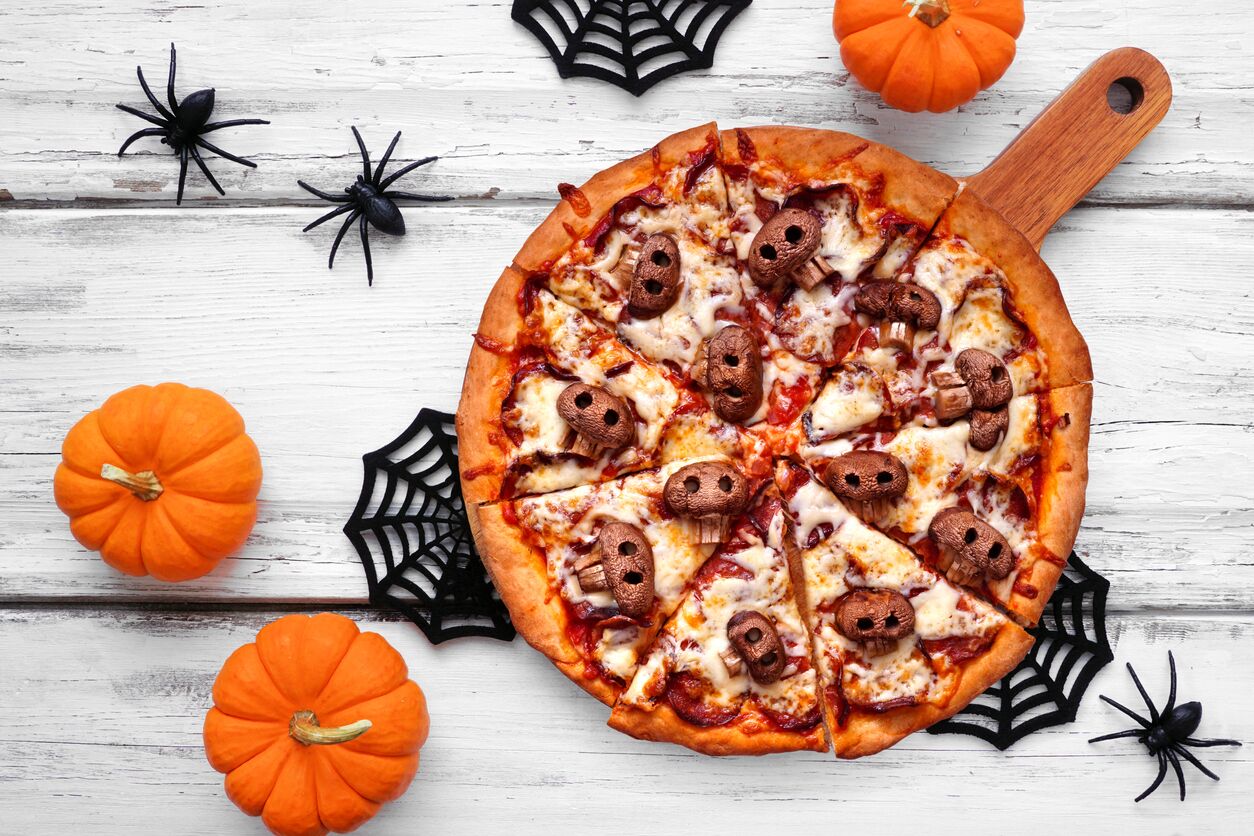
Halloween is pizza’s biggest night of the year. Here’s how to do it right.
Every pizza operator knows the feeling. By the time the first trick-or-treaters hit the sidewalk on October 31, your make line is three deep, and it doesn’t slow down until the parties wind down hours later.
This year, Halloween falls on a Saturday. That means Friday the 30th, already a strong pizza night, turns into a warm-up rush, and Saturday brings trick-or-treating, house parties, and late-night orders all in one shift. You’re not planning for one big night. You’re planning for two.
Here’s how to get ready.
Why Halloween hits pizza so hard
For Halloween 2025, DoorDash’s U.S. ordering data reported that pizza orders climbed 20% while most other dinner categories dropped off. It’s easy to see why: parents are getting kids into costumes, answering the door, and walking the neighborhood. Nobody wants to cook. Pizza is easy, it feeds a crowd, and everyone in the house will eat it.
Then the night shifts. Alcohol orders on Halloween peaked at 7 p.m., right as trick-or-treating starts to wind down. That’s when the adult parties get going, and those parties need food. For a lot of shops, that means a family rush in the early evening followed by a second wave of bigger party orders later on.
Where the Halloween rush breaks down
Volume alone isn’t what makes Halloween hard. It’s what volume exposes. The weak spots in your operation that you can work around on a Tuesday become real problems when every channel is maxed out at once.
A few of the usual suspects:
- The phone and the line compete for the same people. Every call your staff answers is time they’re not stretching dough or boxing pies.
- Third-party tablets pile up. When orders from three different apps land on three different screens, someone has to retype them, and that’s where mistakes happen.
- Party orders get complicated. Five large pies with half-and-half toppings and a page of modifiers is exactly the kind of ticket that gets rung incorrectly when the store is slammed.
- Drivers go out without a plan. No clear routing means longer delivery times, cold food, and a lot of “where’s my order” calls.
Mistakes cost more on Halloween than any other night, too. It means a remake during your busiest hour, a refund, and potentially a lost customer. Third-party orders add another layer of risk, since customization requests can get lost between the app and the kitchen. You rarely get the customer details you’d need to make it right.
Your Halloween game plan
1. Lock in your menu and push it to every store.
Decide on your Halloween special now, and keep it simple. A rush is not the night to test a new recipe. Once it’s set, get it live everywhere: in-store, online, and on every third-party app.
Then check each delivery app to confirm your special, your pricing, and your item availability match what’s in the store. Set a reminder to pull the Halloween offer on November 1, too.
If you run more than one store, look at how your POS handles menu changes across locations. The best systems let you update a Halloween LTO everywhere at once instead of store by store, and 86 an item at every location the moment it runs out, so nobody is taking orders for something you can’t make. HungerRush operators do this with centralized menu management.
2. Build your schedule around two nights, not one.
With Halloween on a Saturday, Friday the 30th deserves the same attention as the 31st. Put your strongest crew on both nights, and plan for the fact that staff with kids will want time off for trick-or-treating. Line up backups and confirm your drivers early as well.
Pull your numbers from last Halloween before you build the schedule. Your POS reporting should show order volume by hour, by channel, and by location. If last year’s peak hit at 5:30 at one store and 7:00 at another, that matters. If you’re on HungerRush, reporting and analytics breaks this down for every store.
3. Get every order onto one screen
The single biggest fix for a high-volume night is to centralize orders, whether they’re online, phone, walk-in, or third-party. Check whether your POS can pull third-party orders in alongside everything else. If it can, there’s no tablet pile on the counter and nothing gets retyped by hand.
HungerRush, for example, brings DoorDash, Grubhub, and Uber Eats orders into the same queue as your own. Pair that with a kitchen display system that routes each ticket to the right station and flags what’s running late, and you’ll catch problems before they hit the rail.
4. Make big party orders easy to get right
Halloween parties mean large orders, and large orders mean complexity. Half-and-half pies, different toppings on each half, extra sauce, light cheese, a couple of gluten-free crusts. Generic POS systems often force your staff to work around this with notes and nested menus, which is where errors creep in.
This is a good place to take a hard look at your POS. The right system lets your staff ring in half-and-half pies and stacked modifiers without workarounds, and prints them clearly for the kitchen. It’s the reason we built HungerRush for pizza from day one. Fewer remakes, fewer refunds, and fewer customers calling to tell you the order was wrong.
5. Run delivery like it’s the main event
Plan your delivery zones ahead of time, and decide how you’ll handle peak hours if quotes start stretching past your normal window.
Good delivery tools make a real difference here. Look for dispatch that helps you route drivers when orders stack up, live tracking so customers can see where their order is, and automated texts that tell them when it’s on the way. Every update a customer gets on their phone is one less call your team has to answer. In HungerRush, that’s delivery management and dispatch working alongside Driver Track.
6. Give customers a reason to order direct
Third-party apps can bring in extra volume on a big night, but every one of those orders comes with a commission and without the customer data you need to bring that guest back. Halloween is a great night to steer customers toward your own channels.
If your POS includes text marketing, you can send your special to your customer list in a few minutes without exporting a list or logging into another tool. HungerRush operators use text marketing for exactly this. Remind customers to order early, and give them a direct link to do it.
7. Turn Halloween customers into regulars
Halloween brings in customers who’ve never ordered from you before. Don’t let them be one-and-done. Follow up in the first week of November with a thank-you offer or a loyalty invite, and give them a reason to come back before Thanksgiving week. If your POS has loyalty built in, this is a good time to put it to work. The fall stretch is full of strong pizza nights, and the guests you win on Halloween can carry you straight through it.
Make Halloween the night your stores were built for
You’ve worked Halloween before. You know what it takes: good people, a solid plan, and a little luck with the call-outs. The right technology won’t make the rush any smaller, but it will keep the orders straight, the drivers moving, and your team focused on the pizza instead of the screens.
If you’re thinking about how your stores handle the big nights, we’d like to show you how HungerRush operators run them. Reach out to our team to request a demo.